The Quiet Squeeze: Why 2026's Real Creator Story Is the Missing Middle Class
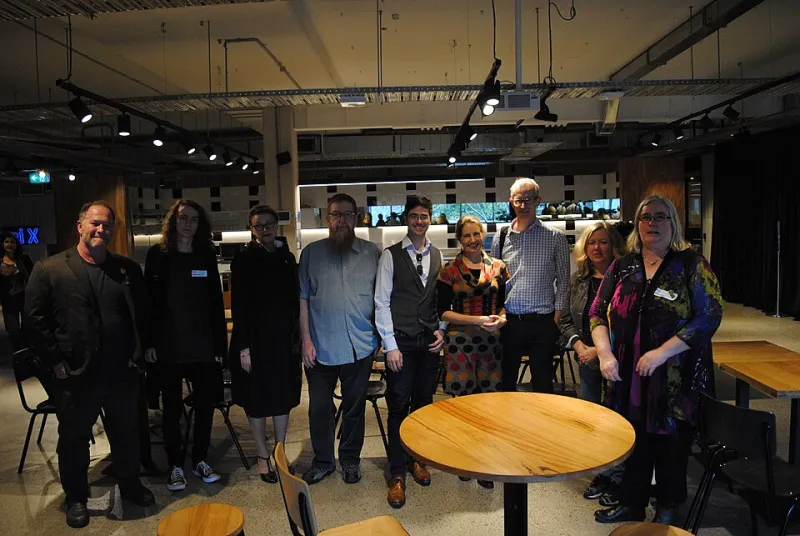
Photo: Andy Mabbett, CC BY-SA 4.0, via Wikimedia Commons
The creator economy has a favorite character: the mega-influencer with a brand deal, a mansion tour, and a business empire. That story is easy to sell. It is shiny, aspirational, and already packaged for a thumbnail. But it is not the most important story in entertainment right now. The real story is the quiet squeeze on the creators in the middle—the ones who are fully committed, fully booked, and still one algorithm change away from a very bad month.
That is the gap mainstream media keeps missing. We get documentaries about creator wealth. We get panel discussions about the future of advertising. We get reality shows about people who are already famous enough to be cast in a reality show. What we do not get is an honest look at the full-time creators who are neither broke nor rich, neither anonymous nor untouchable. They are the middle class of the creator economy, and they are shrinking.
The glamour bias is real
Part of the problem is that creator coverage is drawn to extremes. The top one percent gets the magazine profiles. The bottom gets the cautionary tale. The middle gets a spreadsheet. But the middle is where most of the work happens. These are the creators who post consistently, manage a small team, negotiate sponsorships, edit their own videos, and still answer every comment. They are not chasing virality. They are chasing stability.
That stability is getting harder to find. Platform payouts shift. Sponsorship budgets tighten. Production costs rise. A creator who could once run a channel with a phone and a ring light now feels pressure to hire an editor, buy better gear, and keep up with a content calendar that never stops. The bar for looking professional keeps going up while the safety net stays thin.
The math got harder
A lot of creator economy coverage talks about revenue like it is a single number. It is not. A creator might make money from ad revenue, sponsorships, merch, affiliate links, memberships, and live events. That sounds diversified. In practice, it can mean five unstable income streams that all depend on the same attention economy. When one platform changes its payout structure, the whole balance shifts.
Add in the boring costs that rarely make the highlight reel—health insurance, taxes, software, camera gear, storage, travel, contract help—and the picture gets clearer. The creator middle class is not struggling because it is lazy or untalented. It is struggling because the business model is volatile by design. The people inside it are expected to absorb that volatility personally.
Burnout is a production cost
Burnout is usually treated as a personal problem. In the creator economy, it is a production cost. When a creator runs out of energy, the uploads slow down. When the uploads slow down, the algorithm notices. When the algorithm notices, the sponsorship offers get quieter. The cycle is brutal, and it is happening to people who look successful from the outside.
This is where the mainstream coverage really misses the mark. A show about creator wealth can be entertaining. A show about creator sustainability would be useful. It would ask why so many full-time creators feel like they are running a small business with no HR department, no sick days, and a boss that changes the rules every quarter. That is not a niche complaint. That is a structural issue in a industry that keeps telling young people to bet their careers on it.
Why TV keeps missing it
The entertainment industry loves a neat arc. The mega-influencer story has one: ordinary person posts, goes viral, gets rich, builds a brand. The middle-class creator story is messier. It is a series of small wins and quiet setbacks. It does not fit into a thirty-second promo. It does not produce a clean before-and-after photo.
But that is exactly why it deserves attention. The creator middle class is where the next wave of talent is being tested. It is where the business models are being stretched. It is where the difference between a hobby and a career gets decided. If mainstream media only covers the winners, it is not covering the industry. It is covering the highlight reel.
What a better story looks like
A better story would look at the creators who are making it work without pretending the pressure is not real. It would talk about contract terms, platform risk, mental health, and the unglamorous logistics of running a one-person media company. It would treat creators as workers and small-business owners, not just as content machines. It would ask what happens when the attention dries up, and who is supposed to catch them when it does.
That story is not as flashy as a mansion tour. It does not get the same clicks as a brand-deal breakdown. But it is the story that actually explains where entertainment is going. The creator economy is not just a ladder. It is a labor market. And right now, the middle of that market is under more pressure than anyone wants to admit.
The bottom line
The biggest entertainment story of 2026 is not another record-breaking sponsorship or another influencer making the jump to television. It is the quiet erosion of the creator middle class—the people who make the internet feel alive and are now wondering how long they can keep doing it. Mainstream media should stop chasing the glamour and start covering the squeeze. The drama is already there. It just needs a camera pointed in the right direction.